Showing posts with label Lake District National Park. Show all posts

Saturday, 23 November 2013

Book Review – Lakeland Fellranger : The Far Eastern Fells by Mark Richards


With the gorgeous Upper Kentmere Valley inviting you on the front cover, you know there’s something special about this book.  The 332 pages also tell you this isn't a book done by halves.  Then you spot who it is written by – and you know you’re in for a good read.  And I mean that from the point of view that Mark Richards' text has a poetic flow to it which almost demands to be given more time to.  Many walking guide books only really work when you are using them on the fell – this works as well when you’re sitting at home using it to plan your next journey.  And that’s rare.  To highlight this is the inclusion of a fabric page marker – you don’t get that in a standard walking guide book.  This is a book intended to be read.

This book is the combination of an odyssey which began in 1989 when Mark Richards was still living in his native Oxfordshire.  Inspired by the great Alfred Wainwright to jump into writing, Mark launched himself into being a full-time preparer of walking guides – at the age of 40.  Strange, as in 2014 I turn that age too…  Is there something about that age…?

Anyway, as I mentioned, this book is the last in a series of eight books dedicated to walking the fells of the Lake District – with each of the eight books focusing on a different area.  After 14 years, Mark has walked the 227 fells mentioned in those books many times in all weathers and seasons – the result is a most complete set of walking guides for the Lakeland area, if you are lucky enough to possess all eight.


Now here’s where I have to tackle the inevitable comparisons to Wainwright.  Firstly, is seems wrong to call Mark “Richards” in the same way as we all use “Wainwright” so I’ll use MR and AW.  Ok.  MR has eight books in his series, whereas AW had seven (MR includes the Mid-Western Fells in a separate volume).  AW’s list of fells total the famous number of 214, whereas MR’s total 227 as I’ve mentioned.  It took MR 14 years to complete the eight books and Wainwright took 14 years to write his seven.

There are similarities too.  Like AW, MR – oh that’s enough, Mark – is quite the master at pen and ink drawings, and the products of this talent are liberally used throughout the book – both as pictorial guides to the different routes up fells, and as piece of art in their own right.  In this age of iPads and digital imagery, it’s so pleasing to see good traditional ways of illustrating in a major guide book.

The photos are from the author too – and this gives you a greater sense of trust in the words.  Here, you know that Mark has actually done these walks he is suggesting – a fact you can’t really be sure of if the photos are credited to a stock photographic library.  The photos might not be the atmospheric “I've wild camped for 3 days on this spot to get this moody sunrise” types of shots, but I can tell you I’d be proud to call any of them my own.  Especially Castle Crag on page 142 – which actually does qualify as a moody Lake District shot…

Great attention has been place in the design too.  The aforementioned line drawings and photographs are well spaced out, and indeed there isn't a page which doesn't contain a photo, a line drawing or a map.  And of the maps, there are two notable points.  Firstly, they are the Harvey versions – which provide a welcome change of style to the omni-present Ordnance Survey ones.  Secondly, the maps aren't constrained within boxes here, they are allowed to flow out and live on the page.  So much so, the maps often take over a full page – and on my favourite pages (102-103), the map almost covers the whole double page spread.  (yes I have favourite pages…  The panoramas are also well-made and very useful – laying out on a double page spread what exactly you can see from the summit of each fell.


So onto the routes and the descriptions thereof.  Well, here is Mark’s triumph with this book.  The words really describe in great detail what, where, how you can achieve your goal for reaching the summit of the fells.  To prepare this review, I followed Mark’s descriptions to 3 different fells, and found the detail to be astonishing – with a clever balance between direction and information.  I would never advocate anyone to go out walking in the Lake District without a map – but if my map was taken away from me, I’d want this book instead.  And Mark describes alternative routes to each of the summits – where possible – giving you additional walks in the future by taking the many different variations.

This book completes the eight-volume series.  So, is it possible to suggest the unthinkable?  Could this body of work become the definitive Lake District multi-volume walking guide?  Can the student topple his mentor?  Well, certainly, if a series of this quality and standing had been written about the Peak District say, it would easily be classed as the walking guide for the Peak.  The problem in the Lakes is that AW has got there before anyone else – and that makes it so tricky for anyone else to make their mark (a pun worthy of MR himself there)…

But – and I’m possibly going to lose some friends here – I think Mark’s have the edge.  Sure I enjoy reading AW’s guides and I respect and revere his writing and description – but Mark has the benefit of being around now.  He has the benefit also of the sum total of all the knowledge assembled since AW’s time too.  His guides are easier-to-read but still have an immaculate turn of phrase – which are modern and current.  And phrases will stick in your memory – just like with AW’s books.  It all leads me to prefer Mark’s books to AW’s…

Whether people will be doing the “Richards”, I’m not sure.  Again, perhaps if the series had been about a different area – yes.  But the “Wainwrights” are such a part of British walking culture now, it’s difficult to see that ever changing.  What will change, though, is people will be quoting from Mark’s books in years to come as readily as they do now from AW’s…

You mark my words… (I did it again)


 Lakeland Fellranger : The Far Eastern Fells by Mark Richards
published by Cicerone, priced £14.99
Walks Around Britain rating 9/10

Order it now online from Amazon here 

Tuesday, 8 January 2013

Inspirational photos from Wastwater Photography

Many artists have been inspired by the beauty which is the English Lake District.  One such modern artist uses a camera instead of a paintbrush - but the results are more stunning than any 19th Century painter.  Mark Gilligan of Wastwater Photography produces images which really do leave you lost for words.  Mark has kindly shared a few with us here, and if you'd like to find out more, visit his website here or follow him on Twitter.

Autumnal Sunset on Wast Water from the Slabs
Gathering Storm over Ennerdale

Great Gable 'explodes' on an autumnal sunset

Last rays of winter sunshine

Mist Sunset over The Esk Valley

Passing light on the bracken by Wast Water

Serenity on Wast Water as the Autumn evening closes in

Sunset Fire Sky over Wasdale from Irton Church

Wast Water sunrise 

Mark featured in the 8th edition of our podcast.  You can listen to it here...

Friday, 14 December 2012

Podcast Edition 012 - Show Notes


Edition 12 of the Walks Around Britain podcast is a special dedicated to helping you with Christmas with some top gifts ideas for walking and outdoor people.  If you're still searching for Christmas gift inspiration, then perhaps you'll find some here...


Mountain House navigation courses

These make a great gift for any outdoor person.  Join their popular Hill and Moorland Navigation courses based in the Derbyshire Peak District.  They offer a range of 1 day courses, with a flexible and individual approach designed for both novice and more experienced walkers.  For more info, visit their website


Outwell

Quality camping people Outwell have some fantastic gifts suitable for Christmas presents - despite Andrew's initial hesitancy...  How about the On Air Digital Radio for instance?  Find out all about the products Clive talked about by visiting their website.


Mendip Hills AONB "8 Wild Walks"

The walks, devised by local landscape ecologist Adrian Boots, range from just over 2 miles (4km) to just over 7 miles (12km) take you through a wide variety of landscape types in the Mendip Hills AONB including steep scarp slopes with impressive views across the Levels, windswept plateau criss-crossed with dry stone walls, valley village to lakeside and all with the opportunity to see a variety of wildlife that will change according to the seasons. The guide also includes fascinating facts on plants and wildlife and where to look out for them.

For details of all the stockists and for how to order by mail, visit http://www.mendiphillsaonb.org.uk/publications/


Treasure Trails

Treasure Trails create fun and unique ways to get outside and explore.  They currently have over 1,000 Treasure Trails throughout the UK and are writing more every day.

For more information about the trails on offer, visit their website http://www.treasuretrails.co.uk


Chocolate Fish Merino

For all things Merino, click on the Chocolate Fish Merino website here.

And for a good read, check out their blog - http://chocolatefishmerino.blogspot.co.uk/


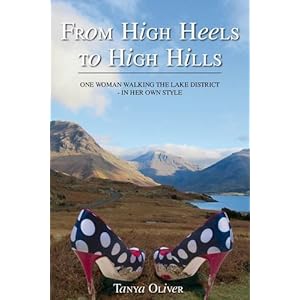
From High Heels to High Hills

From the pen of one of the familiar voices from the Walks Around Britain podcast, Tanya Oliver's first book tells the story of her passion for the mountains of the Lake District and how she’s conquered them - in her own style.

Well worth a read :)

To order from Amazon click here, and to find Tanya's blog, visit here.


Scotland End to End

Documenting the recently opened Scottish National Trail, Cameron McNeish's new book is a great read - and a fantastic guide to the 470 mile route between Kirk Yetholm and Cape Wrath.

As one of the driving forces behind the trail, Cameron is perhaps the most suited to write this book.

For more information, visit the Mountain Media website or to order from Amazon, click here.


Well, that's it - hope you all have a great Christmas and we'll see you for another podcast on the 1st January!

Thursday, 22 November 2012

Getting Around the Lakes. Is sustainable transport really an option?


I’m in the Lake District for a few days… which often happens as a connoisseur of fine landscapes and excellent walking.  But this trip is a little different.  Sure, there have been a few walks, one of which I filmed, and I have caught up on my latest landscape viewing, but intrinsically I’m here now for a different purpose.  


There’s a fundamental paradox with walking.  In order to go walking in new and exciting areas, we often travel by car.  In fact 87% off visitors to the Lake District make their journey by car.  Ok, so there is a fairly good train service to the outskirts of the Lake District via Virgin Trains to Oxenholme – and you can even change trains at Oxenholme to First Trans Pennine Express to take you to the heart of the central Lakes at Windermere.

But what then?

I mean, as popular as Windermere is, it might not be the base
for your trip.  The fantastic High Biggin holiday home from the Beech Hill Hotel is 2.1 miles away and the great self-catering Windermere Lodges are 3.3 miles away at Troutbeck – both of which are great walking distances, but really not with suitcases and all the accoutrements of a holiday.

And of course, when you are here, you need to get around.  With 885 square miles to explore in the Lake District alone, and 2,613 square miles in the wider Cumbrian county, where you want to go might not be within walking distance.

So that pretty much ensures you are maintaining that 87% figure of car journeys to the Lakes.


Or does it?

Well, the people behind Go Lakes Travel are trying to change that.  Go Lakes Travel is a £6.9 million initiative, funded by the Department of Transport, and being delivered in partnership by Cumbria County Council, the Lake District National Park Authority and Cumbria Tourism – and between 2011 and 2015 it aims to generate a step-change in how visitors travel to and around the Central and Southern Lake District, enabling them to make greater use of sustainable modes of travel.

So what does that mean in practice?

Well, the scheme has put several initiatives in places, from making paying for, and changing between different modes of travel easier using smart tickets to targeting information designed to change visitors' travel behaviour to/from and around the Lakes.

But the most interesting parts of the scheme for us walkers is the development of safe, continuous networks for walking, cycling and wheelchair users and the improvements to public transport services and traffic management to tackle congestion and reduce delays.

And then there’s this bit too… “Creating a network of pay-as-you-go car and cycle hire fleets, including recharge stations for electric vehicles”

Interesting.

So when Go Lakes Travel asked if I’d like to try out the pay-as-you-go car and cycle hire fleets, I said “of course”… which is why I’m in the Lakes now.

I've travelled up to the Lake District by car – simply because I didn't have the 4 hours it takes on the train to get from Doncaster – and because I had all the camera and podcast recording gear to bring too.
But if you do travel to the Lakes by train you can now hire a special Mini Clubman direct from next door to Windermere Station.  This low-emission car is intended to get you around the Lakes in a sustainable manner.  It works by first signing up as a member to Co-wheels before your trip.  Then you can book the car online or over the phone.  Once in the Lakes, you hold a special smartcard over the reader on the car and it’s yours for the duration of your booking.  At the end, you simply drop the car back into its bay at Windermere and Co-wheels send you a bill covering your hire.

Sounds good, but what does that cost?  Well, it’s £4.50 an hour plus 21p a mile for insurance cover and fuel, and there’s special discounted rates for longer hires – a weekend from 6pm Friday to 8am Monday is £70 for example.  Plus the 21p a mile of course.

But that’s not the only way of getting around on this project… how about an electric bike?

Electric bikes are badly named.  Most people have an image of a bike whereby you don’t have to pedal… rather like an electric version of a Vespa.  They of course aren’t that at all.  Their proper name should be electrically-assisted bikes.  They are by all accounts a standard bicycle with a motor and hefty batteries on the back.  This means you still have to pedal to propel yourself along, but switch on the electric motor and you get a power boost to help you on your way.  Using the controls at the front of the bike, you can adjust the amount of boost you require, so you can regular your use of the batteries throughout your journey.

There are 17 electric bike hire places across the Central Lakes, and even more charging points – more than 30 at the last count – so it’s very possible to combine a meal or a stay around a place for a while whilst charging those bike batteries up.  There is even a new dedicated Bike Bus – the 800 - with space for up to 12 bikes, and there’s space on several other bus services across the Central Lakes for up to 2 bikes per bus.  And just launched this year is a new Bike Boat from Windermere Lake Cruises between Brockhole, the Lake District Visitor Centre and Wray Jetty on the West Shore of Lake Windermere.

These electric bikes are actually a really good for us walkers, as they allow you to get to great walking areas otherwise inaccessible by motor vehicles, without starting that walk feeling knackered by a 10 mile bike ride first.

The costs are around £35 a day – and the bikes come equipped with built-in lights, locks, helmets, bags and maps.  And at the moment, there’s an offer for 20% off cycle hire if you travel to the Lakes by train.

But the Mini and the electric bikes aren't the only modes of transport you can hire in the Lakes as part of the project.

Oh no… you mustn't forget the Renault Twizy.


Twizys are small, two-seater electric cars which are available to hire on an hourly basis from The Langdale Hotel and the Coniston Boating Centre.  Now, at first glance, you might not think these are a serious form of transport around the Lakes… Well, just look… they don’t have side windows; they have a top speed of around 40mph and they are electric and therefore have a limited range.  Surely driving one of these would leave you sopping wet, with a trail of impatient regular car drivers honking their horns behind you and then you’d run out of power in the middle of the Kirkstone Pass.

Well, you might think so, and if you aren't smart, this is what could happen.

But it doesn't.


I took one out for a whole day, and I can tell you that unless you are in a serious storm, the design of the Twizy is quite good at stopping the 2 occupants – one behind the other – from getting quite wet.  Even spare from the road is limited.  And let’s face it, if you are in the Lakes in the wet, you’ll have proper waterproofs anyway.

Then there’s the 40mph top speed – a major problem you’d think.  Well, no.  Most of the roads around the Central Lakes have a 40mph limit anyway, and even on the ones that don’t, you often find yourself topping 45-47mph anyway.  And because of the nippy acceleration from the electric motors and the incredibly responsive steering, you can go into corners faster, turn and accelerate out of them quicker than most conventional cars too.  This means in the bend, curvy roads of the Lakes, it is actually you driving the Twizy who is behind regular car drivers wanting them to get moving…

The biggest issue of course is “range anxiety” – will you run out of juice whilst in the middle of no-where.  
Well, the Twizys have a stated range of 62 miles - which is actually very usable in the Lakes.  A trip from Troutbeck to Keswick for example is a round trip of around 43 miles – so the range of the Twizy is quite suitable.  And if you are running a tad low of power, then you can always charge the car up at one of the several charging points across the central belt.  You can take a trip on the Ravenglass and Eskdale Railway to the coast whilst your Twizy charges up at Dalegarth station.

Twizys are fantastically engaging cars.  Perhaps not the most practical and certainly not the answer to Britain’s long distance car culture… but they are definitely one thing – fun.  Just  driving one without any real destination will bring a smile to your face.  And for that, they are worth the £10 an hour hire charge alone.

So all told, it is much more feasible to visit and travel around the Lakes without your own car… but it will cost you to be more sustainable and green in your travelling.  For instance, a couple travelling up to the Lake District by car from London for that weekend walking break would cost around £120.  So, with some running around the Lakes let’s say total cost by car is £160.  By train, to travel to Windermere would cost £194 return for two people, and then there’s the £70 hire cost for the Mini Clubman.  Plus that 21p a mile.  So, in excess of £264 by train and Mini as opposed to £160 by your own car.  That of course isn't taking into account of your car insurance, MOT and road tax, but you get the idea – it does cost more to be green.

But, as a start, the Go Lakes Travel project is a step in the right direction; a marked sea change in the desire of the powers-at-be to really address the problems, difficulties and challenges of getting around and exploring one of the country’s favourite areas.

Sunday, 11 November 2012

Book Review - Pub Walks: Walks to Cumbria's Best Pubs

In my experience, small pocket walking books are generally rubbish.  They are often too small with tiny drawn maps - poor relations to proper Ordnance Survey ones - not properly researched, in black and white with no photographs and most are simply lifted from other larger books.

So I must say I came to the latest in Northern Eye Books' Top 10 Walks series with little enthusiasm.  This would be another one bad pocket walking books... wouldn't it?  Well, I started to begin hoping the old adage "You can't judge a book by its cover" wasn't true - as the cover provided a tantalising introduction to the potential of the book.  If I could find that pub, I'll be ready and waiting to go on a walk!


Opening the book up, and I found extended covers - both at the front and the back - which can be used as book markers to hide away the pages of the book not pertinent to the walk.  A touch with I liked.

The author of this little book is Vivienne Crow - and if anyone can pick ten of the best walks to Lake District  pubs, then Vivienne is a great person to carry that out, what with her in-depth knowledge of the National Park.  Looking at the map showing the location of the pubs, there's a good spread across the Lake District; some to the north, some to the west, and, of course a cluster in the honey pot areas around Grasmere, Ambleside and Coniston.  Nothing around the Ullswater area though - does that mean there are either no top pubs around there...?

So what of inside the book?  Black and White?  Walks lifted from other books?  Line drawn maps?

Well, no... no... and no.

The book is beautifully designed with a two column per page layout affording an easy read of the detailed walking routes.  Having done several of these walks - or variations on them - I can attest to the detail in the route descriptions.  Interspersing each of the main walking route is additional notes and comments in italics - these give more info about features to look out for and historical information - and it's rather like Vivienne is walking along with you, chatting to you as you go.  The maps are proper Ordnance Survey Explorer ones, and are shaped so that only the walking route and the immediate surrounding areas are shown in the book.  The walking route is depicted with bold rustic orange lines which are impossible to miss.

Photography in the book is simply stunning - and there are six sources of images credited in the book; one of which is the impressive Stewart Smith - always a favourite of ours.

I also liked the details about each of the pubs featured in the book.  Ok, so the real ales provided can change, as can food serving times, but it is refreshing to not have to return to the net to find out this info,

So, overall, Pub Walks: Walks to Cumbria's Best Pubs is a pocket walking book which has changed my views on pocket walking books.  Colourful; bold yet well designed; littered with interesting images; proper OS mapping and original routes.

In short, a book every Lakeland walker should find a place for on their bookcase - especially at £4.99.


Pub Walks: Walks to Cumbria's Best Pubs by Vivienne Crow, published by Northern Eye Books.
Walks Around Britain rating 9/10

Order it now online from Amazon here.

Friday, 9 November 2012

Fancy winning a Walking Weekend away this weekend?


Want to escape the couch for a fantastic weekend away? Large Outdoors, the nationwide outdoor pursuits and social group, is offering the chance to win a superb walking weekend this weekend coming - from the 16th to the 18 of November in Coniston, the heart of the Lake District.


The trip includes two nights’ accommodation at the Coniston Coppermines youth hostel, evening meals on Friday and Saturday and guided walks through some of the country’s most iconic countryside as well as the chance to meet new friends and live Large Outdoors!

Large Outdoors weekends and day walks are designed to make enjoying the outdoors accessible, safe, convenient and completely hassle free.

To enter, simply enter the height of the Old Man of Coniston at: www.largeoutdoors.com/win.

For more info on events around the country visit www.largeoutdoors.com.

Friday, 2 November 2012

Podcast Edition 010 - Show Notes


Edition 10 of the Walks Around Britain podcast features a trip to Brownsea Island in Poole Harbour with writer and blogger Karen Guttridge, a day volunteering on a Fell Care Day in the Lake District with Tanya Oliver and Alan Hinkes OBE tells us about giving the Wainwright Society's 10th Memorial Lecture.


Brownsea Island


Brownsea Island is dramatically located in Poole Harbour, with spectacular views across to the Purbeck Hills.

Thriving natural habitats - including woodland, heathland and a lagoon - create a haven for wildlife, such as the rare red squirrel and a wide variety of birds, including  dunlin, kingfishers, common and sandwich terns and oystercatchers.


You can find out more from the Brownsea Island pages on the National Trust's website.

Karen has got a set of photos from her trip to Brownsea on her Flickr page here - and you can follow her travels on her blog, Twitter and Facebook.


Fell Care Days

Organised by the charity Friends of the Lake District, the Fell Care Day on October 25th which Tanya Oliver reported from saw 150 volunteers, 90 school children and 27 organisations give the equivalent of 125 days conservation work on the fells in a single day.

The day on Windermere followed the Ullswater event in September when 210 volunteers put in 1000 hours' (142 days) work conserving the fells, cleaning out 24.5km of footpath drains, repairing 40m paths, rebuilding 12m of dry stone walls and clearing 28 bags of rubbish from the lake shore.

You can find the Friends of the Lake District on Facebook here.  Follow Tanya's excellent blog here.


Tanya's first book "From High Heels to High Hills" is available now from good bookshops across the land (and if it isn't, you should complain!) or you can order it from Amazon here.


Alan Hinkes OBE

From The Wainwright Society's first meeting on November 9th 2002 at Ambleside Youth Hostel, the primary aim of the Society has been to keep alive the spirit of Alfred Wainwright.

The annual Memorial Lecture is one of the most anticipated in the Outdoor Event Calendar - and this year it's to be given by Alan Hinkes OBE.

Alan is the first Briton to climb the world's highest mountains. These are the fourteen 8000m peaks, all of which are in the 'death zone', where human survival rate is measured in hours. They are the most dangerous mountains on the planet. Alan is part of an exclusive club of only 12 people alive who have achieved this feat, which is the same number of people who have stood on the moon - and many have perished attempting this challenge.

The 2012 Wainwright Memorial Lecture is to be held on Friday 9th November at 7pm - and tickets can be purchased direct from Rheged on 01768 868000.  To find out more information, visit the Society''s webpage here.


The Bald Explorer


And we've just got time to hear from our friend Richard Vobes - aka The Bald Explorer - who has news
that the first 3 episodes have been picked up by The Community Channel!!  Richard is currently working on more programmes, so if you have an idea which you think might be of interest, send him a Tweet or contact him on his Facebook page.


As always, if you have any comments on this edition of the podcast, please leave them below - we love to read your posts!

Thursday, 25 October 2012

An exciting future for the Lake District's Visitors Centre


In the atmosphere of cut-backs we find ourselves in, it is indeed refreshing to hear about the success of the Lake District Visitor Centre at Windermere - Brockhole.


The next monthly meeting of the Lake District National Park Authority (LDNPA) members will be told the strategic masterplan redevelopment programme for Brockhole is well on the way to turning around the fortunes and future of the centre.

The man in charge, Programme Director Adam Thomas (right), will explain how the number of people visiting the popular lakeside attraction is increasing and at the same time the centre is dramatically reducing the financial  impacts it has on the LDNPA’s overall budget.

His interim report detailed how, in July 2007, the authority set out its intention to turn Brockhole into “a world class visitor attraction”. Already the centre has been transformed by:

The new jetty at Brockhole - photo courtesy of LDNPA

  • building a new jetty to accommodate all Windermere Lake Cruises’ ships;
  • creating a Tree TopTrek woodland adventure course;
  • increasing watersports availability;
  • improving catering facilities; and
  • developing greater retail opportunities.


Visitor numbers to the centre have increased from under 100,000 to 230,000 and the amount of subsidy required has fallen from  £315,000 to £187,000 in the current financial year.

In November, members will receive an updated report detailing in full future plans for areas such as: building a new visitor centre; garden restoration; improving viewing areas; staging large-scale events; car parking; and access changes to the main entrance.

With the news of so many visitor facilities facing reduced opening hours or indeed closure, it is fantastic news to hear about the success of Brockhole.


Please let us know what you think about this news by leaving comments below.